By Matthew Call
Naturalistic ability is one of humanity’s oldest cognitive strengths. Long before written language, mathematics, or formal education systems, humans survived by observing and responding to the natural world—light and dark, seasons, weather, plants, animals, and daily rhythms.
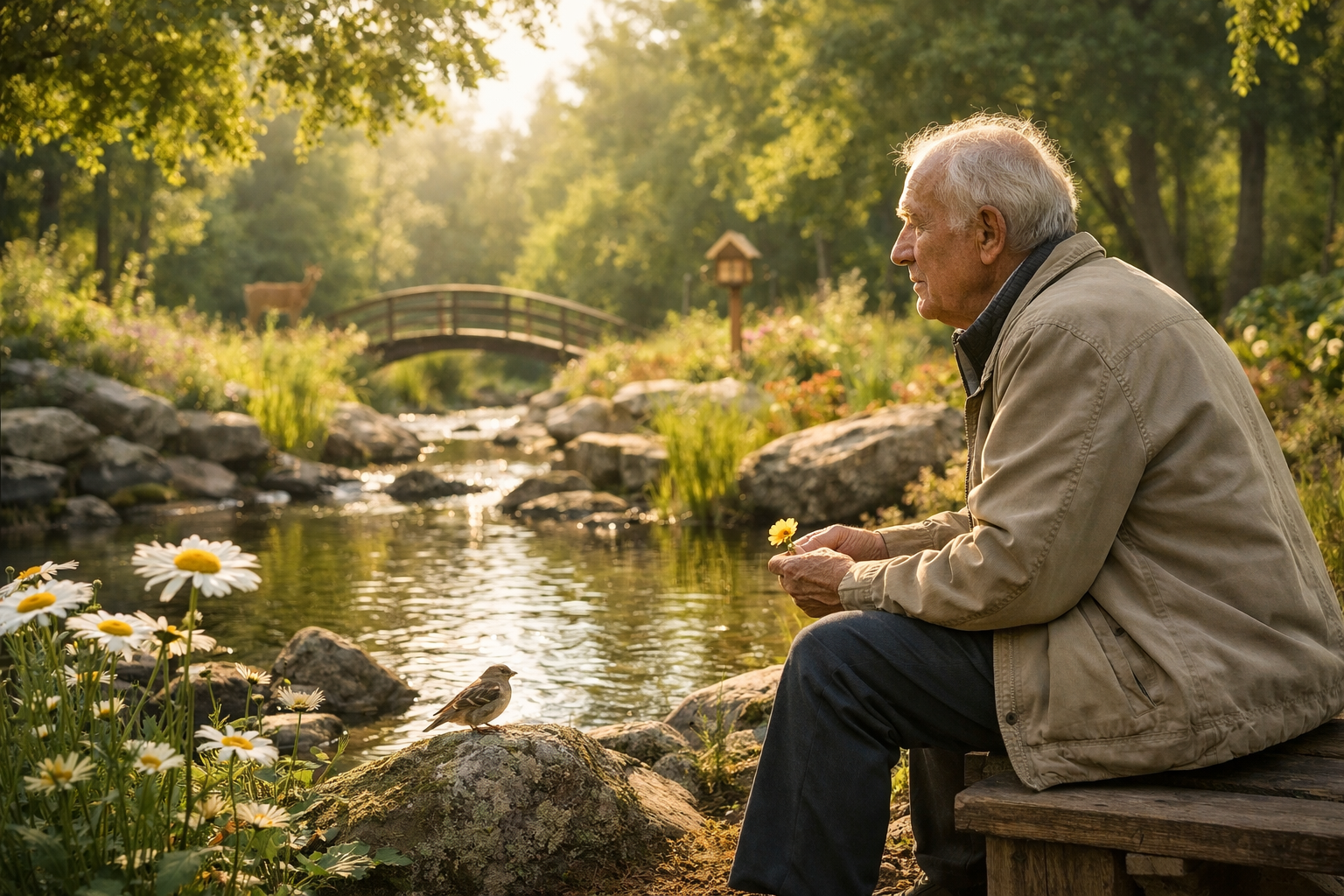
This ability to orient to nature is deeply embedded in the human nervous system. And importantly, it often remains accessible even when other abilities decline, including in people living with dementia.
In the framework of Multiple Intelligences described by Howard Gardner, naturalistic intelligence refers to the ability to notice patterns in the environment and respond meaningfully to them. While it’s often overlooked or misunderstood, it is both common and remarkably resilient.
What Naturalistic Ability Looks Like
Naturalistic ability doesn’t require someone to have been a gardener, hiker, or biologist. In everyday life—and especially in dementia care—it often shows up in quieter ways:
-
Calming when outdoors or in open, natural spaces
-
Positive response to sunlight, fresh air, or changing scenery
-
Engagement with plants, animals, water, or nature-themed activities
-
Improved regulation in sensory-rich, non-verbal environments
These responses are not incidental. They reflect a preserved ability that still knows how to orient, regulate, and connect through nature.
The Problem: Limited Access to the Outdoors
Despite how foundational naturalistic ability is, many dementia care environments provide very limited access to nature, and some provide none at all.
Locked units without outdoor spaces.
Minimal exposure to daylight.
No gardens, fresh air, or meaningful connection to the natural environment.
When individuals living with dementia are cut off from nature, the impact can be significant:
-
Increased agitation and distress
-
Withdrawal and apathy
-
Disrupted sleep patterns
-
Reduced engagement
-
Greater reliance on behavioral interventions
These changes are often attributed to disease progression. In reality, they are frequently the result of environmental mismatch—a care setting that restricts a preserved ability instead of supporting it.
Why This Matters in Dementia Care
Ability-based dementia care starts with a simple but powerful question: What still works?
Naturalistic ability often remains intact because it is:
-
Sensory-based
-
Procedural rather than abstract
-
Emotionally grounding
-
Less dependent on language or higher-order cognition
When care environments fail to support this ability, they inadvertently increase distress and disengagement. When they do support it, behavior often becomes more understandable—and the person more reachable.
Supporting Naturalistic Ability in Practice
Supporting naturalistic ability does not require complex interventions or expensive programming. It requires intentional access and design, such as:
-
Safe and accessible outdoor spaces
-
Indoor plants and natural elements
-
Nature-based or sensory activities
-
Exposure to daylight and fresh air
-
Environments that reflect natural rhythms
Small changes can have meaningful effects when they align with preserved abilities.
Where the M.I. Care Survey and Plan™ Fits
The M.I. Care Survey and Plan™ was designed to measure preserved abilities—including naturalistic ability—and translate those insights into care interventions that match what still works, rather than relying on one-size-fits-all approaches.
By identifying how an individual still learns, engages, and regulates, care teams can intentionally align communication, activities, and environments with retained strengths.
Final Thoughts
Naturalistic ability is not a “nice extra” in dementia care.
It is a foundational human capacity.
When it is ignored, distress often increases.
When it is supported, care becomes clearer, more humane, and more effective.
Ability-based dementia care isn’t about doing more—it’s about doing what aligns with what remains.