For years, organizations have invested heavily in dementia education for frontline staff.
But there’s one group we rarely talk about.
The executives making the biggest decisions.
After working with organizations across the continuum of dementia care, I’ve noticed a pattern.
Many of the people responsible for setting organizational priorities have never received meaningful education on how dementia actually affects the people they serve.
I’m talking about CEOs.
Owners.
Corporate executives.
Executive directors.
Leaders of adult day centers.
Decision-makers responsible for shaping the experience of hundreds—or sometimes thousands—of people living with dementia.
That matters more than many realize.
Because the quality of dementia care isn’t determined only by the caregivers providing it.
It’s determined by the systems built around them.
Every day, executives decide:
- How much dementia education staff receive.
- Which technologies to invest in.
- How success is measured.
- What policies are implemented.
- How environments are designed.
- Where budgets are allocated.
- What organizational culture is rewarded.
Those decisions eventually affect every person living with dementia within that organization.
If executives don’t truly understand dementia, they unintentionally create systems that make good dementia care more difficult to deliver.
Caregivers don’t design those systems.
They inherit them.
And then they’re expected to succeed within them.
This isn’t a criticism of caregivers.
Quite the opposite.
I’ve met extraordinary caregivers throughout my career—people who genuinely want to provide compassionate, person-centered care despite enormous challenges.
But compassion alone cannot overcome a system that wasn’t designed around the realities of dementia.
I’ve seen organizations require only the minimum dementia education mandated by regulation and assume the job is done.
I’ve heard executives describe dementia in ways that reveal fundamental misunderstandings about communication, behavior, learning, and the abilities that often remain.
I’ve watched meetings spend far more time discussing occupancy, documentation, reimbursement, and liability than discussing how to improve the daily lives of people living with dementia.
Those conversations aren’t unimportant.
Organizations must remain financially healthy.
They must meet regulations.
They must manage risk.
But when understanding dementia becomes secondary to everything else, the people living with dementia ultimately pay the price.
Because organizational priorities become organizational culture.
If executives believe dementia is primarily a behavioral problem…
Staff focus on managing behaviors.
If executives believe dementia is primarily a documentation problem…
Documentation becomes the priority.
If executives believe dementia is primarily a staffing problem…
Every solution centers on hiring more people.
But when executives truly understand dementia…
Everything changes.
Training changes.
Communication changes.
Technology is evaluated differently.
Policies become more person-centered.
Environments become more supportive.
Success is measured differently.
Staff receive better support.
Families feel heard.
And people living with dementia receive better care.
The uncomfortable truth is this:
You cannot build an exceptional dementia care organization if the people making the biggest decisions don’t understand dementia.
Sending frontline staff to another mandatory four-hour dementia course won’t solve that.
Real change has to begin where the biggest decisions are made.
Executives don’t need to become dementia specialists.
But they do need a practical understanding of how dementia affects communication, learning, emotions, decision-making, and the abilities that often remain.
When executives understand those things, they make different decisions.
They build different systems.
And those systems give caregivers a far better opportunity to succeed.
Every budget they approve…
Every policy they implement…
Every technology purchase they authorize…
Every staffing model they create…
Eventually reaches someone living with dementia.
Most executives will never meet the people affected by those decisions.
But those individuals live with the consequences every single day.
The future of dementia care won’t be transformed by another slogan or another mandatory training session.
It will change when executives stop asking,
“Are we meeting the regulations?”
and start asking,
“Have we built an organization that truly understands dementia?”
Because when executives understand dementia…
Everything changes.
Continue the Conversation
If you’re an executive, owner, or decision-maker in dementia care, I’d encourage you to ask one question:
Are the systems you’ve built truly designed around the realities of dementia?
To learn more about the Preserved Abilities Method™ and our ability-based approach, visit:
https://preservedabilities.com
We’re also honored that our work was recently featured in Newsweek.
Read the article here:
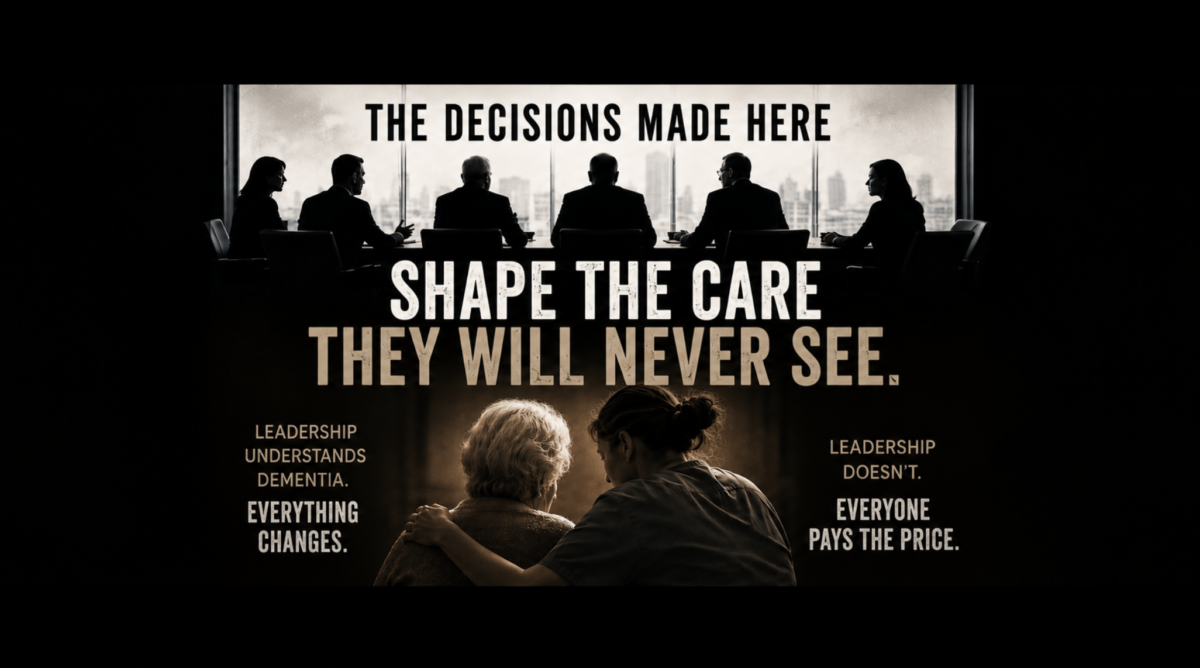
The decisions executives make every day shape the quality of dementia care long before a caregiver enters the room.